
E-Invoicing in details: What You Need To Know
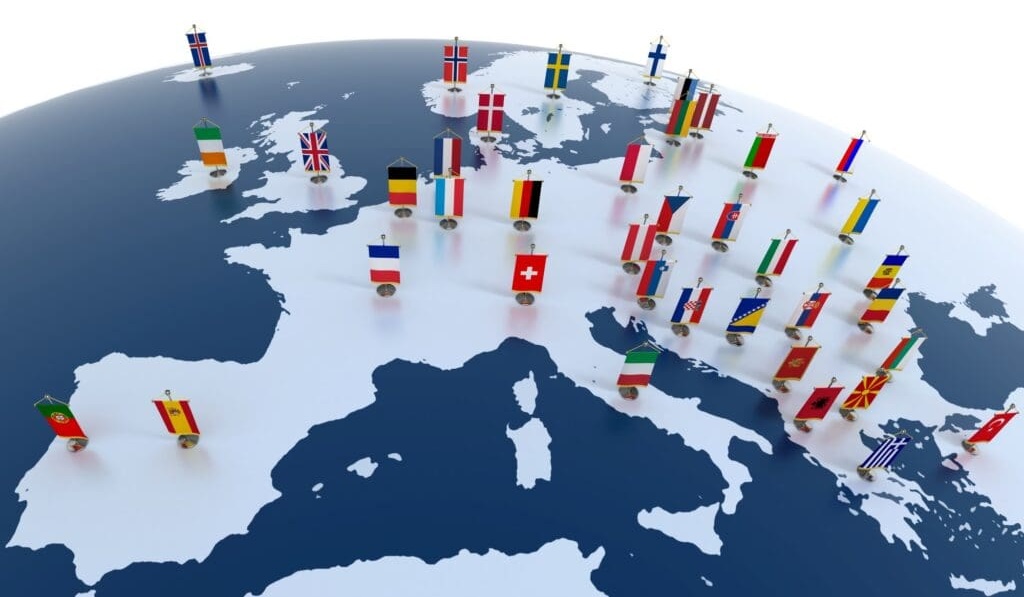
In this article, we explain the facts behind e-invoicing in key European markets, how they affect indie music businesses inside and outside the EU, and how details helps you comply without changing how you run your business day to day.
What is E-Invoicing?
At its core, e-invoicing means creating invoices in a structured, machine-readable format that accounting systems and tax authorities can process automatically. This goes beyond sending a PDF by email. The invoice contains standardized data fields for supplier and buyer details, VAT information, line items, totals, and tax logic. That structure allows invoices to be validated by accounting software, posted, and archived without manual re-entry.
Across the EU, the EN 16931 standard defines how these structured electronic invoices must look. Whether the invoice is delivered as a pure XML file or as a hybrid PDF with embedded data, the underlying structure follows the same rules.
E-invoicing does not introduce a new payment method, and it does not change your commercial agreements. You are not forced into a new accounting system either. What does change is that structured invoices increasingly determine whether your invoices are accepted, processed smoothly, and paid without friction.
What’s Changing In Key European Markets
Many European countries are currently rolling out mandatory e-invoicing rules for business-to-business transactions. Each country follows its own timeline and implementation model, but the direction is consistent. Structured, standards-compliant invoices are becoming the default.
Germany
In Germany, all businesses must be able to receive structured e-invoices from January 2025 onward. The obligation to issue e-invoices will follow in phases, starting in 2027 for larger companies and becoming mandatory for all businesses by 2028.
Approved formats include XRechnung, ZUGFeRD or Factur-X hybrid invoices, and PEPPOL BIS 3.0 compliant XML files. From 2025 onward, German partners increasingly expect invoice data in a structured format, even if they are not yet required to issue such invoices themselves.
France
In France, structured e-invoicing initially focused on public-sector transactions. This framework is now being extended to B2B invoicing, with a national rollout planned through late 2026.
France uses the Factur-X format, which is a hybrid PDF with embedded XML data. It is fully compliant with EN 16931 and closely aligned with the German ZUGFeRD standard. For music businesses invoicing French partners, this means invoices must be prepared in a way that modern accounting systems can consume directly.
Belgium
Belgium is taking a clear and strict approach. From 1 January 2026, all VAT-registered businesses must issue and receive structured electronic invoices for domestic B2B transactions.
Unstructured PDFs will no longer be sufficient. Invoices must follow EN 16931 and are typically exchanged via the PEPPOL BIS 3.0 network. This also affects international suppliers who invoice Belgian customers and want those invoices to be processed without delays or manual intervention.
Spain
In Spain, the legal framework for mandatory B2B e-invoicing has already been approved. The detailed implementation rules are still being finalized, with full enforcement currently expected around 2027.
While this gives Spanish partners slightly more time to adapt, the broader European move toward standardization means early preparation is still advisable.
What This Means For Non-EU Companies
E-invoicing requirements are usually tied to the recipient’s location and tax obligations, not to where your company is incorporated.
If you are a non-EU company invoicing VAT-registered partners in Germany, France, Belgium, Spain, or elsewhere in the EU, you may still be expected to deliver invoices in structured, standard-compliant formats. This is especially common when invoices pass through modern accounting platforms, when clients rely on automated processing, or when accounting partners operate via e-invoicing networks such as PEPPOL.
In practice, many international music companies already encounter these expectations when billing European distributors, labels, or publishers.
How details Helps You Stay Compliant
With details, your invoice creation process stays exactly as it is today. You create invoices based on real sales, services, or bookings. You review and approve the content as usual. Nothing about your internal workflow needs to change.
What details adds is the ability to export each invoice in official, standards-compliant e-invoice formats. This includes PDF/A-3 hybrid invoices with embedded XML data, as well as PEPPOL BIS 3.0 XML files that meet EU structured data requirements.
These exports follow EN 16931 and align with what accounting systems expect in the European markets mentioned above. There is no separate invoicing tool to learn, no parallel process, and no need for manual file conversions.
Validating Your E-Invoices
If you want reassurance that a PDF/A-3 hybrid invoice or XML file will pass automated checks, external validators can provide that confidence.
There are official EU validators for PEPPOL XML invoices, as well as independent tools that verify both the human-readable PDF and the embedded structured data.
Sending And Accounting
details focuses on creating compliant invoice files. It does not transmit invoices into national platforms or the PEPPOL network, it does not act as a certified access point, and it does not replace your accounting or ERP system.
Those responsibilities remain with your accounting software, tax advisors, or certified service providers. This separation keeps roles clear and avoids locking you into a single ecosystem.
Integrating details With Your Accounting System
If you want deeper automation, such as transferring invoice data directly into your accounting system, details offers integration options on request.
In some cases, these integrations are built collaboratively, with interested clients contributing to the initial development effort. The resulting interfaces can then be reused and extended for other clients with similar requirements.
In other situations, where the same integration is clearly relevant to multiple clients, details may move ahead proactively and build the integration as a standard extension. In those cases, a small additional usage fee may apply for clients who use the integration, allowing us to recover the initial development effort over time.
How details helps you to stay compliant
Structured e-invoicing will touch nearly every modern billing workflow. Not because it is fashionable, but because tax authorities and accounting platforms are converging on standardized data formats to improve compliance and efficiency.
Waiting until the last minute often leads to rejected invoices, delayed payments, and unnecessary pressure on finance teams. details allows you to prepare gradually and stay compliant in your invoicing process without disruption.
Let’s Check Your Setup
If you’re unsure how e-invoicing affects your workflows, your partners, or your accounting tools, let’s talk.
Reach out to the details team anytime. We’re happy to look at this with you!
Read more blog posts

Making Money as a Truly Independent Label
Indie record labels undoubtedly have a reputation for being cool and edgy places to work. Only putting out underground music and dedicating their work life to unearthing quirky music that only hits niches at best.

Royalty Software: Find the right Solution for You
A reliable royalty software is the basis of most music industry companies. Record labels, distributors and publishing houses alike need software that helps them convert the income from physical sales and streams into royalty statements for the artists.

Custom-Branded Royalty Dashboard for Labels and Distributors
Royalty reporting is one of the areas where professionalism becomes visible immediately. Your artists expect clarity, your partners expect transparency, and your team needs structure. The B2B Royalty Dashboard in details creates secure, branded partner access without forcing you to change the way your royalty workflow already runs.